Published September 24, 2026
Is Google’s AI calling my business? What agentic calling means for local businesses
If your front desk has picked up an automated-sounding call asking about your prices or your next open appointment, it may have been Google. Since July 2025, Google Search has been able to phone local businesses on a customer’s behalf, and Google has said it picks which businesses to call from its regular local results. That makes the call a lead from a real customer, not a robocall, and it’s one your staff can easily fumble, or that you may have switched off without knowing it.
What this means
Google calls the feature agentic calling. A searcher types something like “pet groomers near me,” taps an option such as “Have AI check pricing,” answers a few questions about what they need, and Google’s AI calls several nearby businesses on their behalf. The customer then gets a summary of what each business said (Stein, 2025). In November 2025 Google extended the same idea to “near me” product searches, where it calls stores to check whether an item is in stock and whether there are any discounts, and sends the results by text or email (Google, 2025).
Google’s own Business Profile documentation lists what these calls are for: booking appointments, checking restaurant wait times, and confirming the price and availability of services and in-store products (Google Business Profile Help, n.d.).
The part that matters for AI visibility is which businesses get called. A Google spokesperson told Search Engine Journal that the AI decides whom to contact based on traditional local search rankings, and only businesses that appear for the query and match the customer’s criteria are called (Southern, 2025). If you don’t show up in the local results, you don’t get the call. If you do show up and the call goes badly, the customer’s summary is built from your competitors’ answers instead of yours.
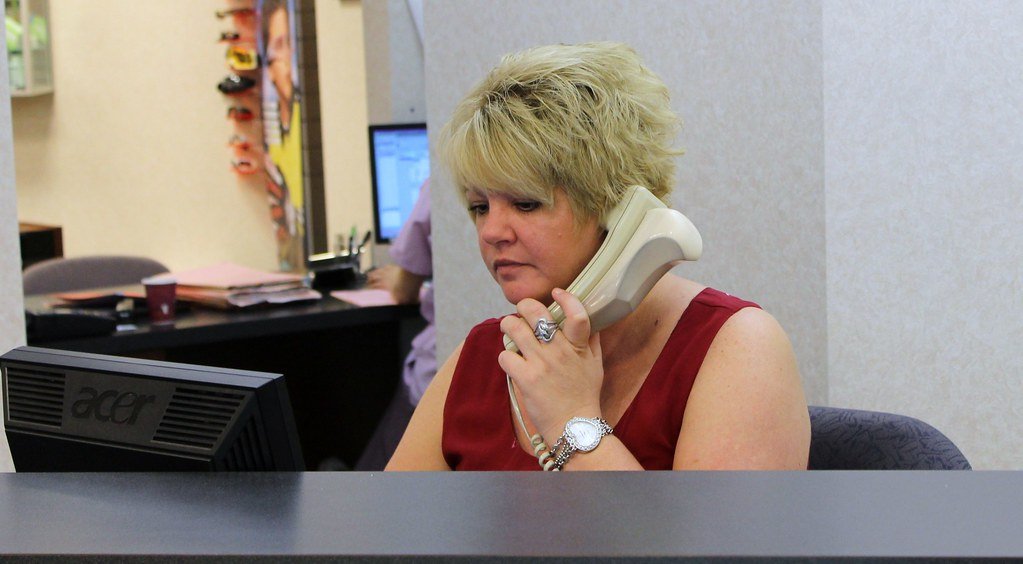
Photo: “receptionist answering phone at suburban eye care” by Suburban Eye Care, CC BY 2.0
Who this applies to
Any local business that quotes prices, confirms availability, or books appointments over the phone. The examples Google has used publicly are pet groomers, dry cleaners, restaurants, and retail stores carrying toys, health and beauty products, or electronics. Google hasn’t published a complete list of categories, so other service businesses shouldn’t assume they’re excluded.
The feature is US-only. As of today, Google’s help page says it isn’t available in Indiana, Louisiana, Minnesota, Montana, or Nebraska (Google Business Profile Help, n.d.). Florida is not on that list.
How we’d evaluate it
We’d start with four checks:
- Ask the people who answer the phone. Have they taken automated calls asking about pricing, stock, or open times? What did they say, or did they hang up?
- Check your settings. In your Business Profile, go to More, then Business Profile settings, then Advanced settings. Under “Google automated calls and text messages,” Google shows separate toggles for bookings and inquiries from customers, keeping your profile up to date, and posting to your profile on your behalf (Google Business Profile Help, n.d.). Know which ones are on.
- Confirm you’re verified. Google says an unverified business can’t change these settings.
- Run the customer’s search yourself. Search the way a new customer would (“[service] near me”) and see whether you appear. If you don’t, the calling feature isn’t reaching you in the first place.
Available options
- Leave it on and prepare your staff. A short script helps: answer the question directly, give a price or range, and name the next available time. Vague answers make for a weak line in the customer’s summary.
- Turn it off. Switch off the toggle in Advanced settings, or say “Please remove my business from your list” during a call. Google notes you may still get occasional manual calls to confirm business information.
- Answer with data instead of phone calls. For retailers, Google says that if in-store product details are already in Google Merchant Center, it uses that data and won’t call to ask about inventory. For appointment-based businesses, Google can book through a connected online booking partner rather than calling.
Benefits, limitations, and tradeoffs
The benefit is a free inquiry from someone who has already decided they want the service and is comparing options right now. The limitations are real, though. You don’t control how Google words the summary it sends the customer. Google says the calls are monitored and recorded for quality assurance. And turning the feature off cuts interruptions but also removes you from that customer’s comparison.
There’s also a lot we don’t know. Google hasn’t published how often businesses receive these calls, how many turn into bookings, or how it orders the answers in a summary. Anyone who gives you precise numbers on any of those is guessing or measuring a very small sample.
What we know
Google announced AI-powered calling to local businesses on July 16, 2025, rolling it out to all US Search users with higher usage limits for paid Google AI subscribers, and said businesses stay in control through their Business Profile settings (Stein, 2025). A Google spokesperson said the businesses called are chosen from traditional local rankings (Southern, 2025). Google expanded the feature to in-stock product checks in late 2025 and updated its how-to guide in July 2026 (Google, 2025). Google’s help documentation says it limits repeat calls for the same information and avoids calling late at night or early in the morning (Google Business Profile Help, n.d.).
What ties this to AI visibility is simple: the same local signals that decide whether AI answers mention you (a verified profile, accurate hours and services, reviews, a consistent name, address, and phone number) now also decide whether an AI agent picks up the phone and calls you.
Next steps
- Verify your Google Business Profile if it isn’t verified yet.
- Open Advanced settings and decide on purpose whether automated calls stay on.
- Brief whoever answers the phone on what these calls sound like and how to answer them.
- Make sure the prices, services, and hours on your website match your Business Profile, so what your staff says matches what Google already has.
- Run the “near me” search for your main service and see who shows up.
Orlando considerations
Florida is included in the rollout. Orlando also has a lot of people searching on their phones for businesses they’ve never used before, including visitors and people new to the area, which is exactly the situation where someone would rather have Google make the calls. That’s our reasoning, not a measured number, but it’s a good reason for Central Florida service businesses to check their settings and their phone script this week rather than find out later that the calls were going unanswered.
Frequently asked questions
Is a call from Google's AI a scam?
It can be hard to tell from the voice alone. Google's documented calls are about a specific customer request: price, availability, a booking, or a restaurant wait time. If an automated caller pushes you to pay for something or hand over account details, treat it as suspicious and verify through your Business Profile directly before acting.
Does opting out hurt my Google ranking?
Google hasn't said that it does, and we haven't seen evidence either way. What opting out does do is take your business out of the price-and-availability summaries Google sends customers who asked it to call around.
Can Google book an appointment with my business without me?
Google's help documentation says it confirms the details with the customer first, then either books through an online booking partner if one is connected, or calls your business directly to book.
Can I make sure Google calls my business instead of a competitor?
No, and be skeptical of anyone who promises it. According to Google, it chooses which businesses to call from its local results and the customer's criteria. What you can control is being verified, accurate, and visible in those local results.
References
Google. (2025, November 25; updated 2026, July 24). Ask Google to call local businesses for you. The Keyword. https://blog.google/products-and-platforms/products/shopping/how-to-agentic-calling-let-google-call/
Google Business Profile Help. (n.d.). About automated calls from Google on behalf of customers. Google. Retrieved September 24, 2026, from https://support.google.com/business/answer/16190256?hl=en
Southern, M. G. (2025, July 16). Google Search can now call local businesses using AI. Search Engine Journal. https://www.searchenginejournal.com/google-search-can-now-call-local-businesses-using-ai/551294/
Stein, R. (2025, July 16). More advanced AI capabilities are coming to Search. The Keyword. https://blog.google/products/search/deep-search-business-calling-google-search
Last updated: September 24, 2026
If you’re not sure whether Google, ChatGPT, or other AI engines are finding your business at all, that’s the gap an AI visibility audit is built to map, with a prioritized list of what to fix first.