Published November 12, 2026
How do I get my business to show up in Claude's answers?
Start with access: Claude can only cite your website if Anthropic's search crawlers are allowed to read it. Anthropic runs separate crawlers for training, for search indexing, and for fetching pages when a user asks a question, and blocking the search-related ones can reduce your visibility in Claude's answers (Anthropic, 2026). After that, it comes down to the same things that matter everywhere in AI search: clear, accurate pages and a business identity that's consistent across the web.
What this means
Claude, Anthropic's AI assistant, can search the web and answer with citations. Anthropic introduced web search in March 2025, saying that when Claude uses web information in a response, it "provides direct citations" so people can check the sources (Anthropic, 2025). So when someone asks Claude to recommend a business near them, the answer may draw on live web results, not only on what the model learned during training.
For a business owner, that splits the question in two. Can Claude's systems reach and read your site? And when they search, do they find sources that describe you clearly enough to name you?
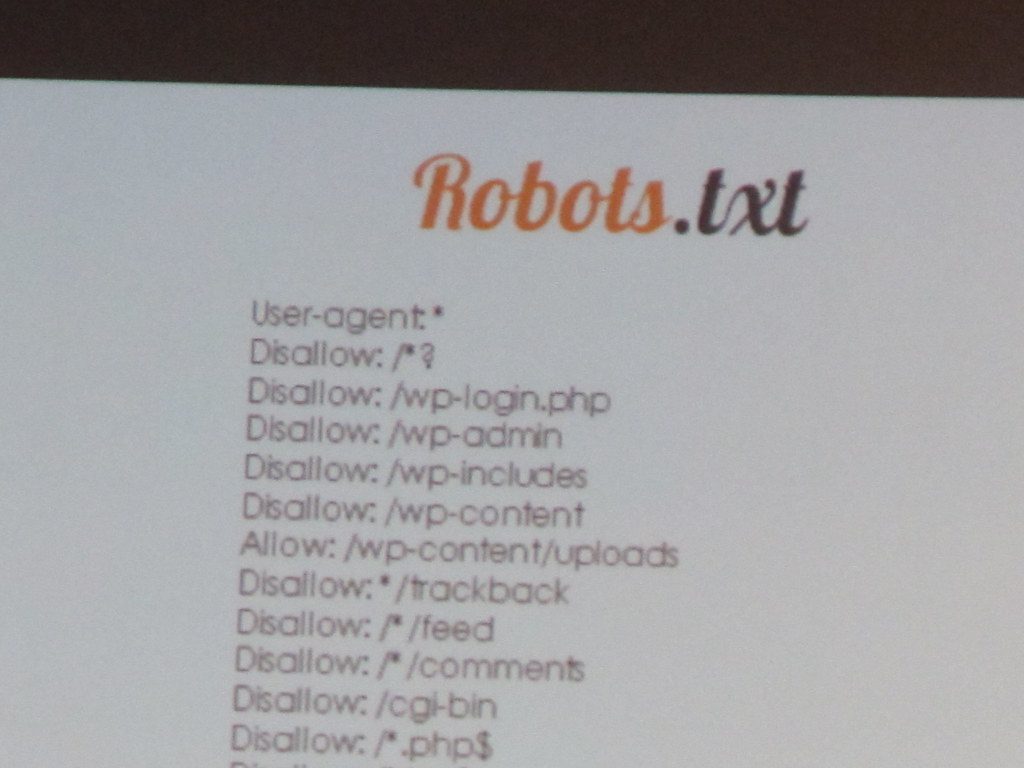
Photo: "Robots.txt" by gd6d, CC BY 2.0
Who this applies to
This applies to any business whose customers might ask an AI assistant for a recommendation, which includes local service businesses, medical and dental practices, law firms, and professional services. It matters more if you've already done work for ChatGPT, Google, or Copilot and assumed Claude would follow on its own. Each assistant has its own crawlers and its own search setup. A robots.txt rule written for one of them doesn't automatically apply to the others.
How we'd evaluate it
We'd start with the robots.txt file. Anthropic lists three user agents: ClaudeBot (training data), Claude-User (fetches pages when a person asks Claude a question), and Claude-SearchBot (indexes content to improve search results). Anthropic says its bots honor robots.txt, and that disabling Claude-User or Claude-SearchBot may reduce your site's visibility in user-directed search (Anthropic, 2026). Many sites added blanket "block AI bots" rules in the past couple of years, so it's worth checking which of these three yours actually allows.
Next, we'd ask Claude the questions your customers ask, with web search on, and look at which sources it cites. Then we'd check whether those sources describe your business correctly. Last, we'd look at your site the way a crawler sees it: is the important information in plain HTML text, or locked inside images, scripts, or PDFs?
Available options
- Allow the search crawlers, decide separately on training. Anthropic's documentation treats the three bots separately, so a business can block ClaudeBot from training while still allowing Claude-SearchBot and Claude-User (Southern, 2026).
- Check where you stand in the search results Claude draws from. In March 2025, TechCrunch reported that Anthropic had added Brave Search to its list of subprocessors (Wiggers, 2025). Developer Simon Willison found that a Claude search returned the same citations as Brave did for the same query (Willison, 2025). Searching for your own business on Brave is a quick, practical check.
- Make your pages easy to quote. State plainly what you do, where you do it, and for whom, in text near the top of your service pages.
- Keep your identity consistent. Use the same name, address, phone, and services on your site, your listings, and the directories that cite you.
Benefits, limitations, and tradeoffs
The benefit is that the first step is cheap. Fixing a robots.txt rule takes minutes, and the content and consistency work also helps you in Google, ChatGPT, and Copilot. The limitation is that Anthropic doesn't publish how Claude decides which sources to cite or which businesses to name. The tradeoff to think through is training versus search. Some owners don't want their content used to train AI models. Anthropic's split between bots lets you act on that without also opting out of being found.
What we know
Here's what's documented. Anthropic runs three crawlers with distinct purposes, each controllable through robots.txt. Its bots honor robots.txt directives and support the non-standard Crawl-delay extension (Anthropic, 2026). Search Engine Journal covered the February 2026 documentation update that formally broke out the three bots and described what happens when each is disabled (Southern, 2026). Claude's web search provides direct citations (Anthropic, 2025).
Here's what's reported but not fully disclosed. Brave Search appears on Anthropic's subprocessor list, and independent testing found Claude's citations matching Brave's results (Wiggers, 2025; Willison, 2025). A subprocessor listing shows that a company is involved in processing data. It doesn't explain exactly how Claude chooses results, and Anthropic can change providers or add new ones. Treat Brave as a useful signal to check, not the whole story.
Next steps
Open yoursite.com/robots.txt and look for rules that mention ClaudeBot, Claude-User, Claude-SearchBot, or a wildcard that blocks everything. Then ask Claude two or three customer-style questions with web search on, and note who gets named and which pages get cited. If your business is missing, or described wrong, those cited pages are where to start.
Orlando considerations
In Central Florida's crowded categories, like dental, med spa, legal, and home services, an AI assistant has plenty of businesses it could name. Many Orlando businesses also run sites on templates or plugins that ship with aggressive bot-blocking defaults. A quick robots.txt check is a common, easy fix before any deeper work.
Frequently asked questions
Is blocking ClaudeBot the same as blocking Claude search?
No. Anthropic documents three separate user agents. ClaudeBot relates to model training, while Claude-SearchBot indexes content for search and Claude-User fetches pages when a person asks Claude something. Each has its own robots.txt rule, and blocking one does not block the others.
Does Claude use Google to search the web?
Anthropic hasn't published a full description of how Claude's search works. In March 2025, TechCrunch reported that Anthropic added Brave Search to its subprocessor list, and developer Simon Willison found that Claude's search citations matched Brave's results for a test query. That's strong evidence, but it isn't a full technical disclosure, and it can change.
Can I submit my website directly to Claude?
Anthropic doesn't offer a public submission form for businesses. What you can control is whether its crawlers are allowed in your robots.txt, whether your pages are readable and accurate, and whether your business is consistently described across the sources a search engine is likely to surface.
Can AnswerFoundry guarantee my business appears in Claude?
No. Claude is operated by Anthropic, a third party, and its answers vary by question, phrasing, and timing. What we can do is fix the signals within your control and track how Claude describes your business over time.
References
Anthropic. (2025, March 20). Claude can now search the web. Anthropic. https://www.anthropic.com/news/web-search
Anthropic. (2026). Does Anthropic crawl data from the web, and how can site owners block the crawler? Claude Help Center. https://support.claude.com/en/articles/8896518-does-anthropic-crawl-data-from-the-web-and-how-can-site-owners-block-the-crawler
Southern, M. G. (2026, February 25). Anthropic's Claude bots make robots.txt decisions more granular. Search Engine Journal. https://www.searchenginejournal.com/anthropics-claude-bots-make-robots-txt-decisions-more-granular/568253/
Wiggers, K. (2025, March 21). Anthropic appears to be using Brave to power web search for its Claude chatbot. TechCrunch. https://techcrunch.com/2025/03/21/anthropic-appears-to-be-using-brave-to-power-web-searches-for-its-claude-chatbot/
Willison, S. (2025, March 21). Anthropic Trust Center: Brave Search added as a subprocessor. Simon Willison's Weblog. https://simonwillison.net/2025/Mar/21/anthropic-use-brave/
Last updated: November 12, 2026
If Claude leaves you out, or gets your details wrong, an AI visibility audit maps which signals are missing and which to fix first.