Published September 13, 2026
Does my website need a lot of traffic before ChatGPT will cite my business?
Run the numbers before assuming heavy traffic is a prerequisite: a November 2025 analysis of 129,000 domains found that ChatGPT citation rates stay essentially flat — averaging 2 to 2.9 citations regardless of exact volume — for any site under roughly 190,000 monthly visitors (Deda, 2025). A site pulling in 20 visitors a month scored about the same as one pulling in 20,000. Most local and professional-service businesses never come close to six-figure monthly traffic, and based on this data, they don't need to.
What this means
Traffic is a real signal to ChatGPT, but it behaves like a threshold, not a slope. The correlation with citations only shows up once a domain clears roughly 190,000 monthly visitors — past that point, citations climb sharply, with domains over 10 million monthly visitors averaging 8.5 citations (Deda, 2025). Below that line, the data shows essentially no difference between a site with a handful of visitors and one with thousands. That's a different picture than traditional SEO, where incremental traffic growth usually compounds into incremental ranking gains.
One traffic metric did matter at an achievable scale: homepage traffic specifically. Sites with at least 7,900 organic visitors to their main page saw the highest citation rates in the study — a number within reach for a well-run local business, unlike the six-figure sitewide threshold (Deda, 2025).
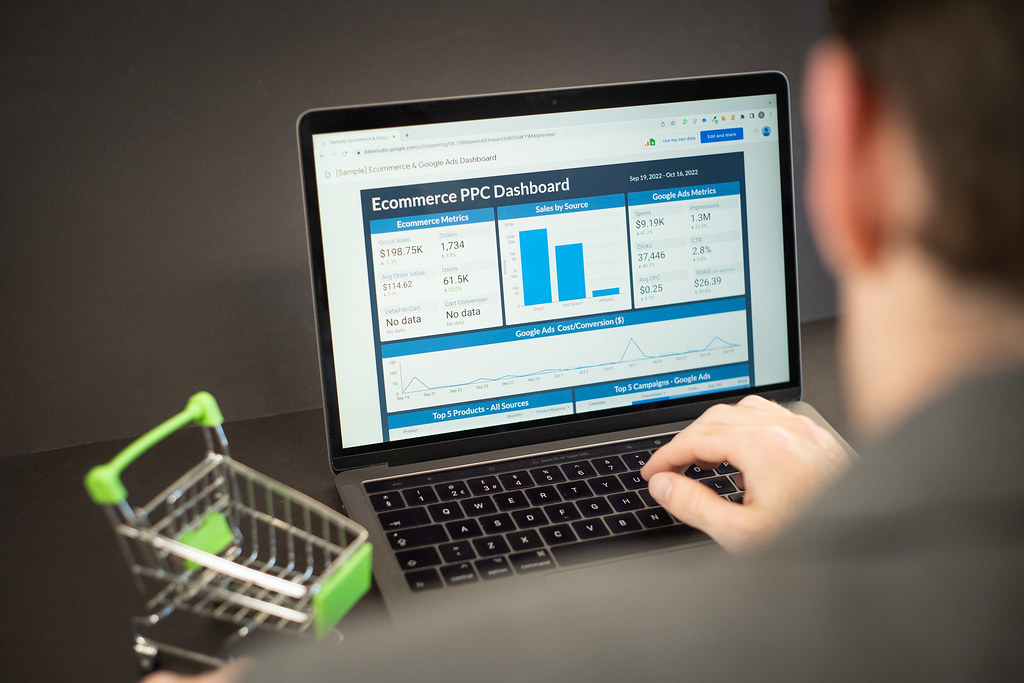
Photo: "Interpreting Ecommerce Website Analytics" by Zuko.io Images, CC BY 2.0.
Who this applies to
This matters most for owners who've assumed AI visibility requires the same scale as ranking #1 on Google — that a business needs to "out-traffic" competitors before an AI engine will consider naming it. It applies directly to law firms, contractors, medical and dental practices, financial advisors, and other local service businesses whose total monthly traffic realistically sits in the hundreds or low thousands, not the hundreds of thousands.
How we'd evaluate it
A full audit looks at where a business actually stands on the factors that predicted citations in the underlying study — referring domains and domain trust scored higher than traffic itself, and content depth, freshness, and structure all correlated more strongly with citations than raw visitor counts (Deda, 2025; Southern, 2025). We check those signals directly rather than treating traffic as a stand-in for AI visibility, because at the traffic levels most local businesses operate at, it isn't one.
Available options
There are three ways to act on this:
- Check your own analytics against the study's numbers. If you're under 190,000 monthly visitors — nearly every local business is — traffic isn't your bottleneck, and chasing it as an AI-visibility strategy is a poor use of budget.
- Get a full audit. It identifies which of the higher-weighted factors — backlinks, structured data, review-platform presence, content depth — are actually holding a business back.
- Set up ongoing monitoring. AI engines re-crawl and reweight sources on their own schedule, so a fix made today can take weeks to show up in results.
Benefits, limitations, and tradeoffs
The upside of this finding is real: a small local business doesn't need six-figure traffic to be citable. The limitation is that this is correlational data from one study of one AI engine at one point in time — OpenAI hasn't published its own ranking formula, and the researchers who ran the study caution that other AI systems may weight the same factors differently (Deda, 2025). Treat the specific thresholds as directional, not as a guarantee of what any individual business will see.
What we know
OpenAI's own documentation confirms that ChatGPT "ranks search results using multiple factors intended to help users find relevant, reliable information" and that "placement is not guaranteed" (OpenAI, 2026) — consistent with the finding that traffic alone doesn't determine citations. The underlying research, a machine-learning analysis of 129,000 domains and more than 216,000 pages across 20 industry niches, found referring domains and domain trust scores were stronger predictors than traffic; sites with over 32,000 referring domains saw citations nearly double, while traffic only correlated with citations after crossing the 190,000-visitor mark (Deda, 2025). Search Engine Journal's coverage of the same research highlighted that content depth, freshness, and average Google ranking position tracked similarly with ChatGPT citations, suggesting overlap between the two systems' notion of authority even though ChatGPT doesn't rely on Google's index directly (Southern, 2025).
Next steps
Pull your own site's monthly traffic and compare it honestly to the 190,000-visitor threshold. If you're well under it — as most local businesses are — stop treating traffic growth as an AI-visibility strategy and put that effort into the factors the data says matter more at your scale: referring domains, review-platform presence, content depth, and keeping key pages updated on a regular cadence.
Orlando considerations
Central Florida's competitive categories — med spas, dental practices, law firms, home services — are almost entirely made up of businesses well under the traffic thresholds in this study. That's good news: a smaller Orlando practice competing against a national brand isn't at a structural disadvantage on traffic alone. The gap that matters locally is usually in referring domains, review-platform presence, and content depth — all things a smaller, well-run business can control directly.
Frequently asked questions
Does this mean traffic doesn't matter at all for AI visibility?
Not quite — it means traffic doesn't meaningfully affect citations within the range most local businesses operate in. The correlation only appears once a domain passes roughly 190,000 monthly visitors, a level well above what most local and professional-service sites reach.
Should I still try to grow my website traffic?
Growing traffic is generally good for a business regardless of AI visibility, but the data doesn't support treating traffic growth specifically as an AI-citation strategy for a small or mid-sized local business. Referring domains, content depth, and review-platform presence showed a stronger and more achievable correlation.
Is this true for AI engines besides ChatGPT?
The study behind this article analyzed ChatGPT specifically. The researchers note that other AI systems may weight traffic and other factors differently, and no comparable public study currently covers Perplexity, Gemini, or Google AI Overviews at the same scale.
Can AnswerFoundry guarantee my business will be cited if I fix these factors?
No — and you should be skeptical of anyone who guarantees placement in a system they don't control. What's achievable is improving every signal within reach and tracking the change over time.
References
Deda, Y. (2025, November 24). How to optimize for ChatGPT: LLMs.txt doesn't matter but brand mentions on Quora and Reddit do. SE Ranking Blog. https://seranking.com/blog/how-to-optimize-for-chatgpt/
Southern, M. G. (2025, November 26). New data reveals the top 20 factors influencing ChatGPT citations. Search Engine Journal. https://www.searchenginejournal.com/new-data-top-factors-influencing-chatgpt-citations/561954/
OpenAI. (2026). Searching the web with ChatGPT. OpenAI Help Center. https://help.openai.com/en/articles/9237897-chatgpt-search
Last updated: September 13, 2026
Not sure where your business actually stands on the factors that matter more than traffic — backlinks, structured data, review presence, content depth? An AI visibility audit maps the specific gaps and prioritizes what to fix first.