Published September 16, 2026
Does internal linking help AI search visibility?
Yes — internal links are one of the clearest, most within-your-control signals for how both Google and AI answer engines map your site, and the most common failure isn't too few links but links that go nowhere useful. Google says directly that every page you care about should be reachable from at least one other page on your site (Google Search Central, 2025). AI systems that synthesize an answer instead of ranking a list of links inherit that same dependency: if a crawler can't find a page or can't tell how it relates to the rest of your site, an AI engine can't cite it either.
What this means
Internal linking is the practice of connecting pages on your own site to each other with contextual, in-content links — as distinct from navigation menus or footers, which Google treats as a separate category in its own guidance (Google Search Central, 2025). For traditional search, internal links do two jobs: they help crawlers discover pages, and they signal which pages matter most by how often and how prominently they're linked to. For AI-generated answers, the job is closer to a third one — helping the system understand which page on your site actually owns a given topic, so it has one clear, well-supported page to point to instead of several thin, competing ones.
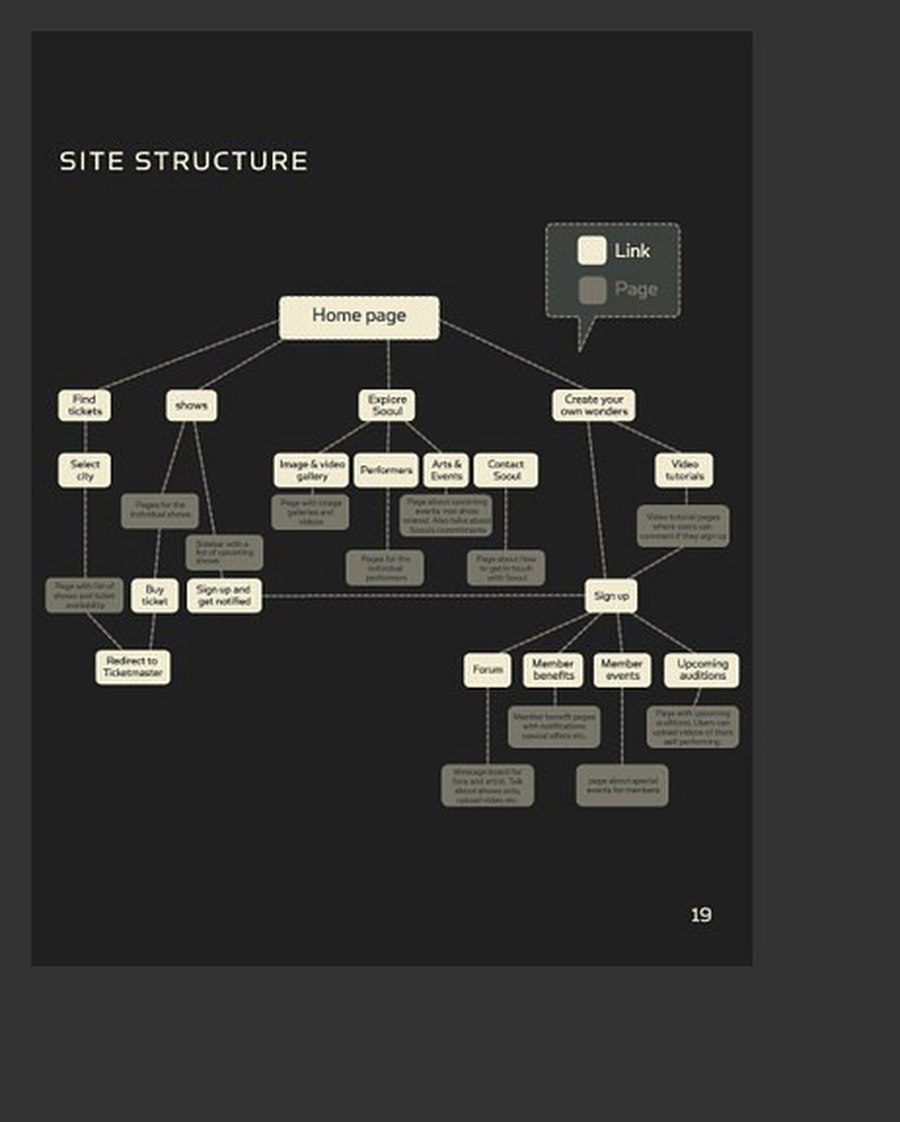
Photo: "Site Map and User/System Flow Diagram" by VFS Digital Design, CC BY 2.0 (cropped)
Who this applies to
Any business whose website has more than a handful of pages — multiple service pages, location pages, or blog posts — benefits from checking its internal linking, because that's exactly where the problem tends to show up. A site with one homepage and one contact page doesn't have much of an internal-linking question to answer. A site with a dozen service pages, several blog posts, and no links tying them together does, because both crawlers and AI systems have to work harder to figure out how those pages relate — and systems working under a time or crawl budget tend to skip pages rather than solve that puzzle.
How we'd evaluate it
A practical review starts with a crawl of your own site to find orphaned pages — pages with no incoming internal link at all, which one large-scale analysis puts at roughly a quarter of pages on the average site (Cariño, 2026). From there it checks anchor text (does it describe the destination page, or is it generic “click here” wording), link depth (how many clicks from the homepage a page sits), and whether your most important pages are the ones actually receiving the most internal links, rather than being buried behind pages that matter less to your business.
Available options
- Do nothing and rely on your site's existing structure. Free, but a site that grew page by page over time usually has the orphaned-page and generic-anchor problems described above without anyone noticing.
- Fix it manually. Read through your own pages and add contextual links between related ones. Works for smaller sites; doesn't scale well past a few dozen pages.
- Run a structured linking audit. Crawls the site programmatically to flag orphaned pages and link depth, closer to the approach behind large-site case studies.
Benefits, limitations, and tradeoffs
The upside of internal linking work is that it's entirely within your own control — unlike backlinks or reviews, you don't need another business or customer to cooperate. The limitation is that internal linking alone doesn't create authority that doesn't exist; it redistributes and clarifies the authority a site already has. Adding links between ten thin, generic pages won't turn any of them into a page AI systems want to cite. And more links isn't automatically better — Google's own guidance is blunt about this: there's no magical ideal number of links a page should contain, but “if you think it's too much, then it probably is” (Google Search Central, 2025).
What we know about internal linking and AI citations
Google is explicit that it uses links to determine page relevance and to find new pages to crawl, and that every page worth caring about should have at least one incoming link from somewhere else on the site (Google Search Central, 2025). Independent data shows how unevenly that guidance gets followed in practice: an analysis of 2.5 million contextual internal links across 1,700 real websites found that while most anchor text is descriptive and keyword-rich as recommended, only about 8% of links show strong topical alignment between the anchor text and the page it points to — most internal links connect pages that aren't closely related (Cariño, 2026). Site-level case studies show what happens when that gets fixed: one real estate marketplace restructured its internal linking so pages Googlebot already trusted linked directly to pages it was ignoring, and saw crawler visits to the previously neglected pages rise by roughly 230–266% over a comparable period (Honcharyk, 2021). None of this is a documented AI-citation ranking factor the way it's documented for crawling — no AI provider publishes that formula — but the mechanism is the same: a system that can't find or contextualize a page can't cite it, no matter how good the content on that page is.
Next steps
Start by finding your orphaned pages — the ones with no internal link pointing to them at all — since those are functionally invisible to both crawlers and AI systems regardless of content quality. Then check whether your highest-priority pages are actually the ones receiving the most internal links, and replace generic anchor text (“click here,” “learn more”) with descriptive phrases that name the destination page's topic.
Orlando considerations
Central Florida service businesses often build out location or neighborhood pages — one for each part of Orlando, Winter Park, or the surrounding area — and that's exactly where orphaned pages tend to accumulate, since new location pages get created faster than anyone goes back and links to them from the pages that already have traffic and trust. Checking that newer pages are actually reachable from your established, well-linked pages matters more here than in a market with fewer, less granular local pages competing for the same AI answer.
Frequently asked questions
Is internal linking the same thing as backlinks?
No. Backlinks come from other websites linking to yours and are largely outside your control. Internal links connect pages within your own site, which makes them one of the more cost-effective signals to fix because nobody else's cooperation is required.
How many internal links should a page have?
Google's own guidance is that there's no ideal number — if a page's links feel excessive to a reader, they probably are (Google Search Central, 2025). The more useful question is whether each link is there because it genuinely helps a reader understand the page, not to hit a target count.
Can internal linking alone get my business cited by an AI engine?
No single fix does that, and you should be skeptical of anyone who claims one does. Internal linking helps a system find and understand a page that already deserves to be cited; it doesn't manufacture authority a page doesn't have.
Does internal linking matter for a small site with only a few pages?
Less than it does for larger sites, since a small site has fewer opportunities for a page to go undiscovered. It's still worth checking that every page, including newer ones, has at least one link pointing to it from somewhere else on the site.
References
Google Search Central. (2025, December 10). Link best practices for Google. Google for Developers. https://developers.google.com/search/docs/crawling-indexing/links-crawlable
Cariño, J. (2026, January 30). 2.5 million internal links study: How websites link their content. LinkStorm. https://linkstorm.io/resources/internal-links-study
Honcharyk, A. (2021, November 1). Case study: How DOM.RIA doubled their Googlebot visits using JetOctopus. JetOctopus. https://jetoctopus.com/domria-casestudy/
Last updated: September 16, 2026
If your site has grown page by page without anyone checking how it all links together, that's exactly the kind of gap an AI visibility audit is built to map, with a prioritized list of what to fix first.