Published September 17, 2026
Does a Google Knowledge Panel help my business show up in AI answers?
Search your own business name on Google and you might see an information box sitting beside the results — and it's tempting to assume that box is the goal, and that ChatGPT, Perplexity, and AI Overviews read directly from it. Neither assumption holds up. The box most people picture is a Knowledge Panel, most local businesses actually have something different, and the AI systems built on the same underlying data care about the database, not the box on the page.
What this means
Google draws a specific, published distinction here. A Knowledge Panel is "automatically generated" from the Knowledge Graph — Google's database of entities and how they relate to each other — and reserved mostly for people, companies, organizations, and creative works that Google can already verify from multiple independent sources (Google, n.d.; Bird, 2025). A Business Profile, the listing most local businesses actually claim through Google Business Profile, looks similar on the page but is built from information the business submits directly, not automatically assembled the way a Knowledge Panel is (Google, n.d.).
That distinction gets more important once AI enters the picture. Google's own documentation, published in May 2025, states that AI Overviews work "in tandem with...the Google Knowledge Graph," and that AI Mode "taps into real-time information from the web and from Google, like facts from our Knowledge Graph" (Google, 2025). Neither feature is described as reading a Business Profile or a Knowledge Panel directly — both draw on the graph underneath them.
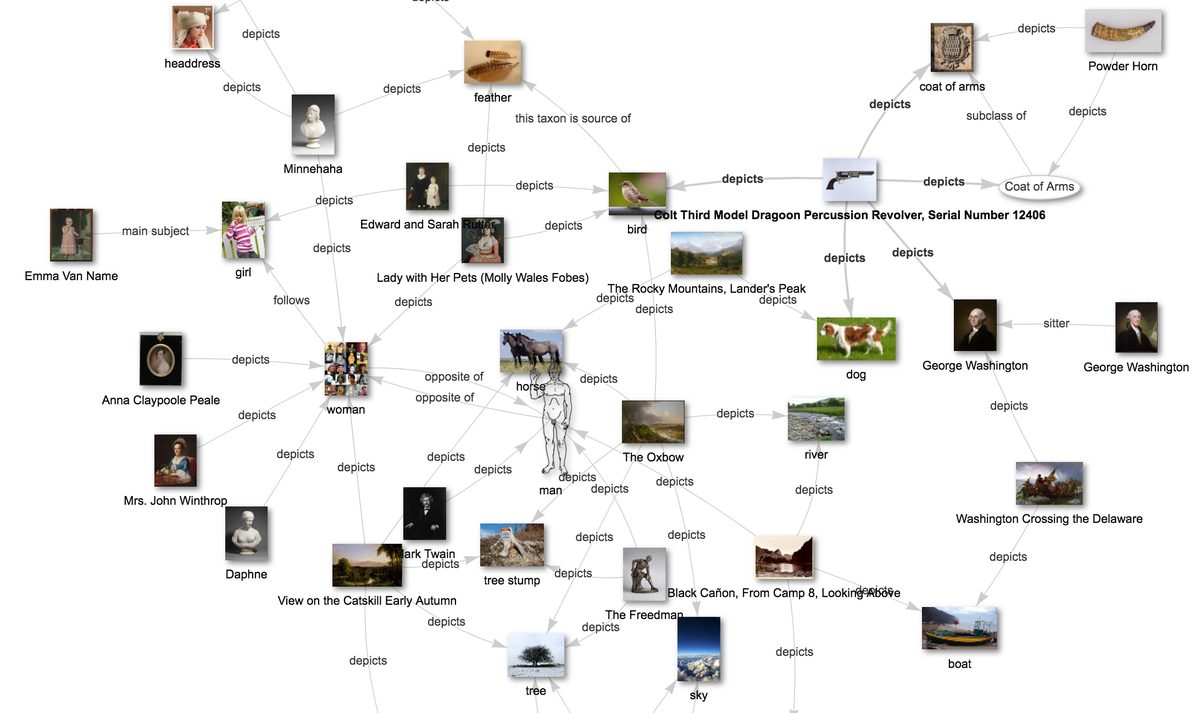
Photo: "Wikidata-knowledge-graph-fuzheado-metobjects-1" by Fuzheado, CC BY-SA 4.0
Who this applies to
This distinction matters most for businesses with more than a purely local footprint — regional or multi-location brands, professional practices with press coverage, and companies with a name that's hard to confuse with a competitor's. A single-location practice competing mainly on "near me" searches is far more likely to be represented by a Business Profile than a full Knowledge Panel, and that's the normal outcome, not a shortfall. The entity data behind both still feeds AI visibility either way.
How we'd evaluate it
An audit starts by checking whether Google already recognizes the business as a distinct entity at all — searching the brand name to see what box, if any, appears, and checking tools like Google's Knowledge Graph Search API for a formal entry (Gavoyannis, 2026). From there, it reviews the structured data (schema.org markup) on the website, whether a Wikidata entry exists, whether the business's name, address, and phone number match everywhere it's listed, and how many independent, authoritative sources mention the business at all.
Available options
There are three ways to act on what an audit finds:
- Do nothing beyond maintaining the Business Profile. That's the baseline nearly every local business already has, and it's a reasonable place to stop if AI-driven discovery isn't yet a major channel for the business.
- Build the underlying entity signals. Schema markup, a Wikidata entry, consistent citations, and earned press mentions all increase the odds Google recognizes the business as a fuller entity over time.
- Monitor it on an ongoing basis. Google actively edits what's in the graph — in June 2025 it removed more than three billion entities from the Knowledge Graph in a single week, a move read as a shift toward a smaller, higher-quality dataset feeding its AI features (Gavoyannis, 2026).
Benefits, limitations, and tradeoffs
The benefit of being a recognized entity is real: a Knowledge Panel functions like a permanent presence in the search results that isn't tied to organic ranking fluctuations (Bird, 2025), and the same underlying data is one of the inputs AI Mode and Gemini draw on when deciding what to surface (Google, 2025). The limitation is that none of this can be requested or purchased. Google's own help documentation states plainly that a Knowledge Panel "is triggered by Google's algorithm when they have gathered enough reliable information" and can't be manually created. A Business Profile also doesn't guarantee inclusion in the Knowledge Graph — it's one signal among many, not a shortcut to one (Gavoyannis, 2026).
What we know about how AI systems use this data
Google's Knowledge Graph is large and constantly changing: it's estimated to hold roughly 54 billion entities and 1.6 trillion facts drawn from public sources, licensed data, and direct edits from verified entities (Gavoyannis, 2026). Google's own May 2025 documentation confirms both AI Overviews and AI Mode consult this same graph as part of how they ground answers in verified facts rather than generating them from web text alone (Google, 2025). None of that amounts to a guarantee for any individual business — Google has never published the exact threshold an entity has to cross to earn a Knowledge Panel, and no outside party, including AnswerFoundry, can promise a specific outcome in a system it doesn't control.
Next steps
Search the business's own name today and note exactly what shows up: a full panel, a Business Profile-style box, or nothing distinctive at all. Then check whether the website has Organization or LocalBusiness schema markup with a sameAs property linking to verified profiles — social accounts, review sites, a Wikidata entry if one exists. That's a five-minute check that says more about where the business stands than another look at Google rankings.
Orlando considerations
Central Florida's density in categories like med spas, dental practices, law firms, and home services means several similarly named or similarly positioned businesses often compete within a few miles of each other. That overlap makes it harder for Google — and for AI systems drawing on the same entity data — to disambiguate one business from another without consistent, well-corroborated information. Businesses in crowded local categories have more to gain from getting the basics right than businesses with little competition nearby.
Frequently asked questions
Is a Knowledge Panel the same thing as my Google Business Profile?
No. Google's own help documentation treats them as separate features: a Business Profile is built from information a business submits directly, while a Knowledge Panel is automatically generated by Google's algorithm from data it has already verified across the web. Most local businesses have a Business Profile, not a classic Knowledge Panel, and that's the normal outcome, not a shortfall.
Can I pay or apply to get a Knowledge Panel?
No. Google states plainly that a Knowledge Panel can't be manually created — it appears only when its algorithm has gathered enough reliable, corroborated information about an entity. Anyone offering to sell or guarantee one should be treated with the same skepticism as anyone guaranteeing placement in an AI answer.
Does having a Knowledge Panel guarantee I'll be named in ChatGPT or Google AI Overviews?
No — and you should be skeptical of anyone who says otherwise. A Knowledge Panel reflects the same underlying entity data that AI systems draw on, but Google's own documentation describes AI Overviews and AI Mode as consulting the Knowledge Graph broadly, not any single panel, and third-party systems like ChatGPT and Perplexity run their own separate retrieval processes entirely outside AnswerFoundry's or Google's control.
What's the single most useful step for a small local business here?
Get the fundamentals right before worrying about a Knowledge Panel specifically: an accurate, fully filled-out Google Business Profile, consistent name, address, and phone details everywhere the business is listed, and basic Organization or LocalBusiness schema markup on the website. Those are achievable in weeks, and they feed the same entity data that both classic Knowledge Panels and AI systems rely on.
References
Google. (2025, May). AI Overviews and AI Mode in Search [PDF]. https://search.google/pdf/google-about-AI-overviews-AI-Mode.pdf
Google. (n.d.). About knowledge panels. Knowledge Panel Help. Retrieved September 17, 2026, from https://support.google.com/knowledgepanel/answer/9163198
Bird, H. (2025, November 27). Google Knowledge Panel: What it is and how to get featured. Search Engine Land. https://searchengineland.com/guide/google-knowledge-panel
Gavoyannis, D. (2026, May 14). Google's Knowledge Graph explained: How it influences SEO & AI search. Ahrefs. https://ahrefs.com/blog/google-knowledge-graph/
Last updated: September 17, 2026
If your search turned up nothing distinctive — or a box with outdated or inconsistent details — that's exactly the kind of gap an AI visibility audit is built to map, with a prioritized list of what to fix first.