Published September 19, 2026
Do AI Overviews only cite pages that rank in the top 10?
No — and the gap has widened fast. A March 2026 Ahrefs study of 863,000 keyword searches and 4 million AI Overview citations found that only 38% of the pages Google's AI Overviews cite also rank in the top 10 organic results for that same search (Ahrefs, 2026). A year earlier, that overlap was 76%. The rest of what gets cited now comes from deep in the rankings, or from pages that don't rank for that search term at all.
What this means
For most of the time AI Overviews have existed, a reasonable assumption was that ranking well on the exact keyword was most of the battle — if Google trusted a page enough to put it on page one, that page was also a strong candidate to get cited. That assumption is now backed by less than half the evidence it used to be. Google's own documentation confirms why: both AI Overviews and AI Mode can use a "query fan-out" technique, issuing multiple related searches across subtopics before assembling a response, and citing whichever pages answer those sub-queries best — not necessarily the pages that rank for the original phrase a person typed (Google Search Central, n.d.).
That's a meaningfully different bar than classic ranking. A page can be the best-optimized result for "best dentist Orlando" and still lose the citation to a page that better answers a sub-query like "what to ask before choosing a dentist," even if that second page never shows up in a top-10 list for the original search at all.
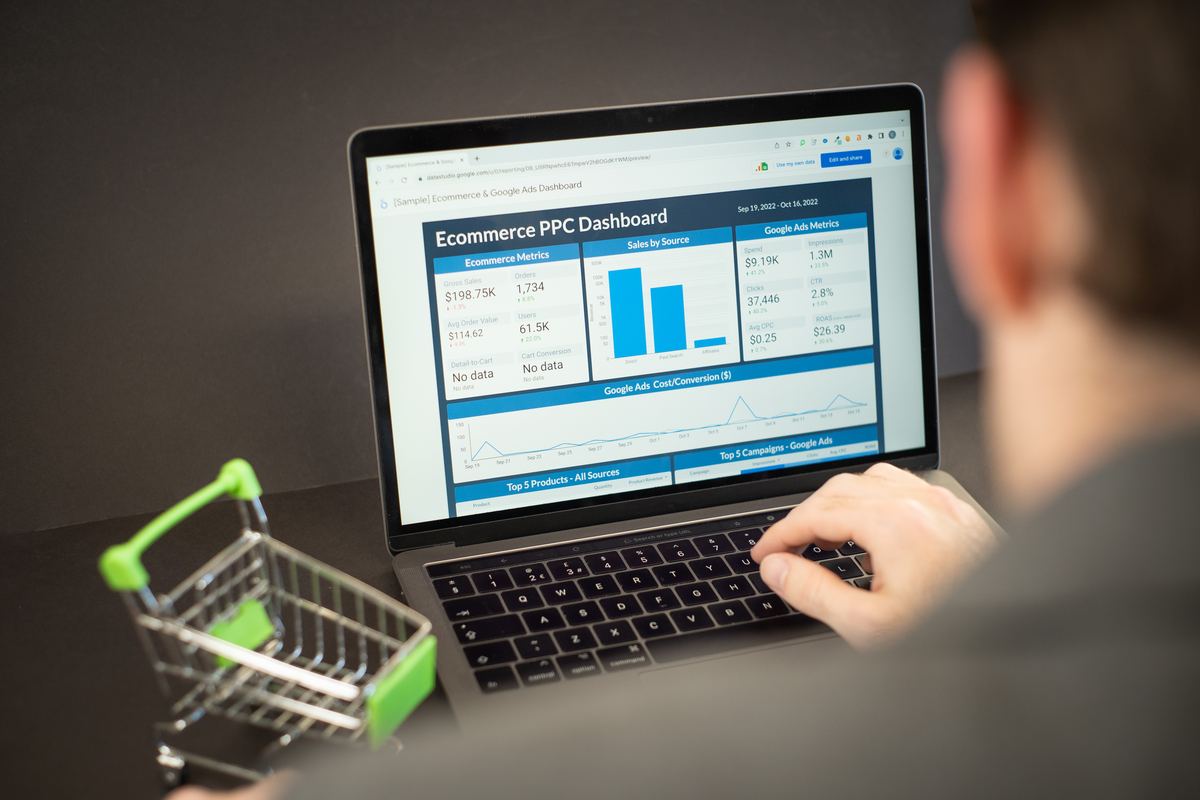
Photo: "Interpreting Ecommerce Website Analytics" by Zuko.io Images, CC BY 2.0.
Who this applies to
This matters most for businesses that have treated their Google ranking as a proxy for AI visibility — checking a rank tracker, seeing a top-10 position, and assuming the AI visibility question is answered. It applies broadly across local and professional services: law firms, medical and dental practices, contractors, and home services companies that compete on "best X near me" style searches, where a single page trying to cover an entire service category is common. It matters less for businesses with no organic search presence to begin with, since indexing and basic SEO eligibility are still a floor requirement, not something this change removes.
How we'd evaluate this for a business
A proper check goes beyond glancing at a rank tracker. It means running the actual customer-phrased questions — not just the head keyword — across ChatGPT, Perplexity, and Google AI Overviews, and logging which pages get cited versus which merely rank. It means reviewing whether a business's content answers the likely sub-questions around a topic (pricing, credentials, service area, what to expect) rather than just the single head term. And it means checking whether content exists in formats AI systems appear to favor for non-ranking citations, including video, since YouTube alone accounted for 5.6% of all AI Overview citations in the same Ahrefs dataset (Ahrefs, 2026).
Available options
- Do nothing and keep tracking rankings only. Free, but it measures a signal that's now explaining less than 40% of what actually gets cited.
- Audit citations directly, not just rankings. Requires running real questions across AI engines and logging results — doable manually, though time-consuming to repeat regularly.
- Build content around the full topic, not one keyword. Covering the sub-questions a buyer actually has, in multiple formats, gives more surface area for a fan-out query to match against.
Benefits, limitations, and tradeoffs
Broadening content to cover a topic's full range of sub-questions, rather than optimizing narrowly for one phrase, is a defensible strategy precisely because Google has confirmed the fan-out mechanism exists — it isn't speculation. The limitation is that neither Google nor any third-party tool exposes the specific sub-queries generated for a given search, so this is directional work, not a checklist with guaranteed outcomes. AI Overviews are also probabilistic: citations for the same query can change from one run to the next, which is exactly why a single test isn't conclusive and repeated monitoring matters more than a one-time check.
What we know
The clearest data point comes from Ahrefs' updated analysis of 863,000 keyword SERPs and roughly 4 million AI Overview URLs, published March 2, 2026: 37.9% of cited pages appeared in the first 10 result blocks (counting ads and SERP features), and a near-identical 37.10% when isolating standard organic listings only — down sharply from the 76.10% overlap Ahrefs measured in July 2025 (Ahrefs, 2026). Ahrefs attributes part of the shift to improved citation-detection methodology and part to Google's January 2026 upgrade of AI Overviews to the Gemini 3 model, which the company says may be leaning more heavily on fan-out expansion (Ahrefs, 2026). Search Engine Journal's independent coverage of the same study flagged a separate BrightEdge analysis, using different methodology, that found roughly 17% top-10 overlap — a different number, but directionally the same conclusion: the gap between ranking and citation is real and it's growing (Search Engine Journal, 2026). Google's own developer documentation confirms the underlying mechanism without disclosing the specifics of how fan-out queries are generated for any individual search (Google Search Central, n.d.).
Next steps
Run three or four real customer questions about your category, not just your business name, across ChatGPT, Perplexity, and Google's AI Overview, and note which pages get cited — yours, a competitor's, or neither. Then check whether your own site content actually answers the adjacent questions a buyer has, not just the single phrase you'd want to rank for. If a competitor is getting cited without outranking you, that's a specific, diagnosable signal, not a coincidence.
Orlando considerations
Central Florida's density in categories like med spas, dental practices, law firms, and home services means several similarly positioned businesses are often competing for the same handful of AI citation slots in a single metro area. Because fan-out queries pull from a wider set of sub-topics than a single "near me" search, a business here has more surface area to win a citation on — an angle a competitor hasn't covered — but also more competitors capable of claiming that same angle first.
Frequently asked questions
So does ranking #1 on Google not matter anymore?
It still matters — ranking well remains one of the strongest single signals for getting cited. But the data shows it's no longer sufficient on its own. A page can rank on page one and never get cited, and a page ranking on page four or not ranking at all can get cited if it answers one of the sub-queries Google's system generates.
What is a "query fan-out"?
It's Google's own term for a process where a single search is split into several related sub-searches behind the scenes before an AI Overview or AI Mode answer is generated. Pages that answer those sub-queries well can get cited even if they don't rank for the original, exact search term.
Can I see the fan-out queries Google generates for my search terms?
Not directly — Google doesn't publish the sub-queries it generates for any given search. Third-party tools can simulate likely fan-out queries, and reviewing your own AI Overview citations over time is the most reliable way to see which angles of a topic are actually earning citations for your business.
Does this mean SEO is less important now?
No — it means SEO and AI visibility are no longer the same target. Traditional SEO fundamentals (indexability, technical health, helpful content) remain the entry ticket, since Google requires a page to be indexed and eligible for a standard snippet before it can be cited in an AI feature at all. What's changed is that ranking well for one exact keyword is a smaller part of the picture than it used to be.
References
Google Search Central. (n.d.). AI features and your website. Google for Developers. Retrieved September 19, 2026, from https://developers.google.com/search/docs/appearance/ai-features
Linehan, L., & Guan, X. (2026, March 2). Update: 38% of AI Overview citations pull from the top 10. Ahrefs Blog. https://ahrefs.com/blog/ai-overview-citations-top-10/
Southern, M. G. (2026, March 2). Google AI Overview citations from top-ranking pages drop sharply. Search Engine Journal. https://www.searchenginejournal.com/google-ai-overview-citations-from-top-ranking-pages-drop-sharply/568637/
Last updated: September 19, 2026
If you're not sure whether your business is getting cited for the questions that actually matter to your customers, that's exactly the gap an AI visibility audit is built to map, with a prioritized list of what to fix first.